Best Neighbourhoods in Rome for English-Speaking Residents
Nine districts compared by how you get around, what the nights sound like and what daily life is like.
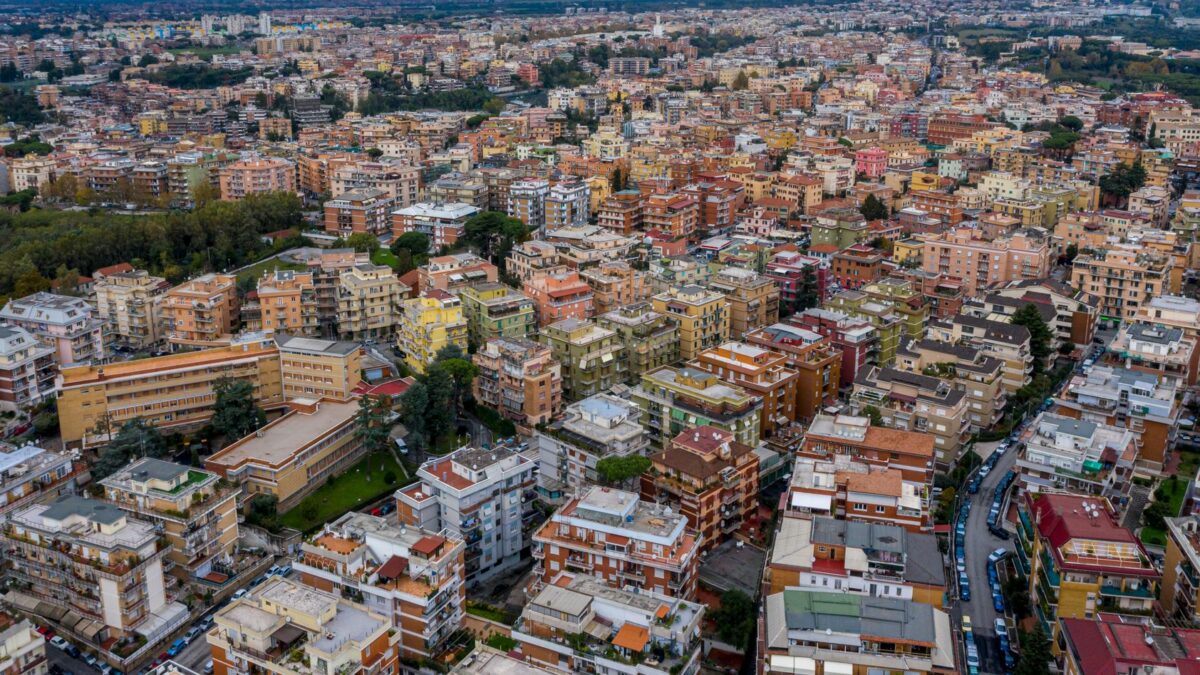
For English-speaking residents, the most practical Rome neighbourhoods are those on a metro line or a fast tram: Prati and San Giovanni for transit and shops, Testaccio and Garbatella for local life, Monti and Trastevere for the centre, and EUR for offices and quiet streets. Pick by commute and noise first, rent second.
Rents change quickly and listings vary street by street, so this guide gives no price figures. For current ranges, use the property price observatory (OMI) of the Agenzia delle Entrate at agenziaentrate.gov.it, which publishes official quotations by zone, and compare with several listing sites.
Which neighbourhoods suit English-speaking residents?
| Neighbourhood | Transport | Character |
|---|---|---|
| Trastevere | Tram 8, buses; no metro | Lively, tourist-heavy, noisy nights |
| Monti | Metro B (Cavour, Colosseo) | Central, boutiques, bars |
| Prati | Metro A (Ottaviano, Lepanto) | Residential, offices, close to the Vatican |
| San Giovanni | Metro A and C | Large, practical, many shops |
| Testaccio | Metro B (Piramide) | Local, food markets, nightlife on weekends |
| Garbatella | Metro B | Quiet, courtyards, local feel |
| Nomentano | Metro B (Bologna), buses | Residential, near La Sapienza |
| EUR | Metro B | Planned, modern, quiet in the evening |
| Monteverde | Tram 8, buses | Residential, hilltop, parks |
How do commutes work?
Rome’s metro has Lines A, B, B1 and C. Line B runs to the south through Testaccio, Garbatella and EUR; Line A links Prati, the centre and San Giovanni. Line C serves the south-east. Our guide to Rome’s metro lines explains the network, and the ATAC fares guide covers tickets. Without a metro station nearby, expect buses and trams that can be slower at rush hour.
Look at where you work before you look at rent. A flat near a metro station that gets you to the office in 25 minutes can be better than a cheaper flat 45 minutes away.
Where is it quiet, and where is it noisy?
Trastevere and Monti are lively late into the night, particularly on weekends, and ground-floor flats near squares can be noisy. Testaccio has weekend nightlife around the old slaughterhouse area. Garbatella, Monteverde, EUR and parts of Prati are generally quieter after dark. Visit at night and on a Saturday before you sign.
What is daily life like in each area?
Trastevere and Monti suit people who want to walk everywhere and accept crowds. Prati has wide streets, shops and cafés, and sits near government offices and courts. San Giovanni is well connected, with a large market and supermarkets. Testaccio has a covered food market. Garbatella has a village feel and low-rise buildings. Nomentano is close to the university and to the Policlinico hospital. EUR is a planned district of broad avenues, offices and parks.
What about safety?
Rome is generally safe for residents, but pickpocketing is common around Termini, on busy buses and metro Line A, and near major sights. Streets differ at night, so walk the route from the station to the flat after dark. Official safety data are published by the Interior Ministry at interno.gov.it.
How do you find and compare rents?
- Pick two or three neighbourhoods, not nine.
- Check the OMI zone quotations for each to see official ranges.
- Compare several listing sites for flats of similar size and floor.
- Ask what is included (condominium fees, heating, furniture).
- Check the type of contract: see our guide to rental contracts in Rome.
Which neighbourhoods suit students and short stays?
Nomentano and San Giovanni are common choices for students because of the metro and the universities nearby. Monti and Testaccio suit people on a transitory contract who want to be in the middle of things for a few months and do not mind the noise. For stays of under a year, the contract type matters as much as the area: see our guide to rental contracts in Rome for transitory and student leases.
How do you check noise and the building before you commit?
Visit at two different hours, listen from the bedroom window and check what is on the ground floor of the building: a bar, a restaurant or a delivery bay can change the night completely. Ask about the heating (central or individual), whether there is a lift, and how the building handles waste collection. Old Roman buildings often have thin walls and no air conditioning, which matters in summer.
It also helps to ask neighbours or the building’s caretaker (portiere) about problems such as water pressure, roof leaks or noisy neighbours. Their answers are more useful than the listing text.
What about schools, parks and services?
Families often prioritise parks and schools: Monteverde has Villa Pamphili nearby, EUR has large green areas, and Prati has wide avenues and primary schools. Garbatella and Testaccio have the dense local services of a small town. For health services, register with a family doctor through the ASL that covers your address: see our guide to choosing a medico di base in Rome.
Bottom line
For a first year, choose a neighbourhood on Line A or Line B and visit it on a weekday morning, a weekday evening and a Saturday night. If you plan to stay longer, consider Garbatella, Prati or Nomentano, where daily life is calmer and the commute is straightforward.
FAQ
Which area is best for families?
Many families look at Prati, EUR, Monteverde and Nomentano for space, parks and schools. Check the catchment area of the school first.
Do I need to speak Italian to rent in these areas?
Not necessarily, but listing and paperwork are mostly in Italian. English is more common in central areas and near the universities.
Is Trastevere worth the noise?
It depends on the street. Upper floors on side streets are much quieter than flats on the main squares.