Why Rome Is Called the City of Seven Hills: Which Hills Count
Rome's seven hills are the Aventine, Caelian, Capitoline, Esquiline, Palatine, Quirinal and Viminal. See what stands on each and why others are left out.
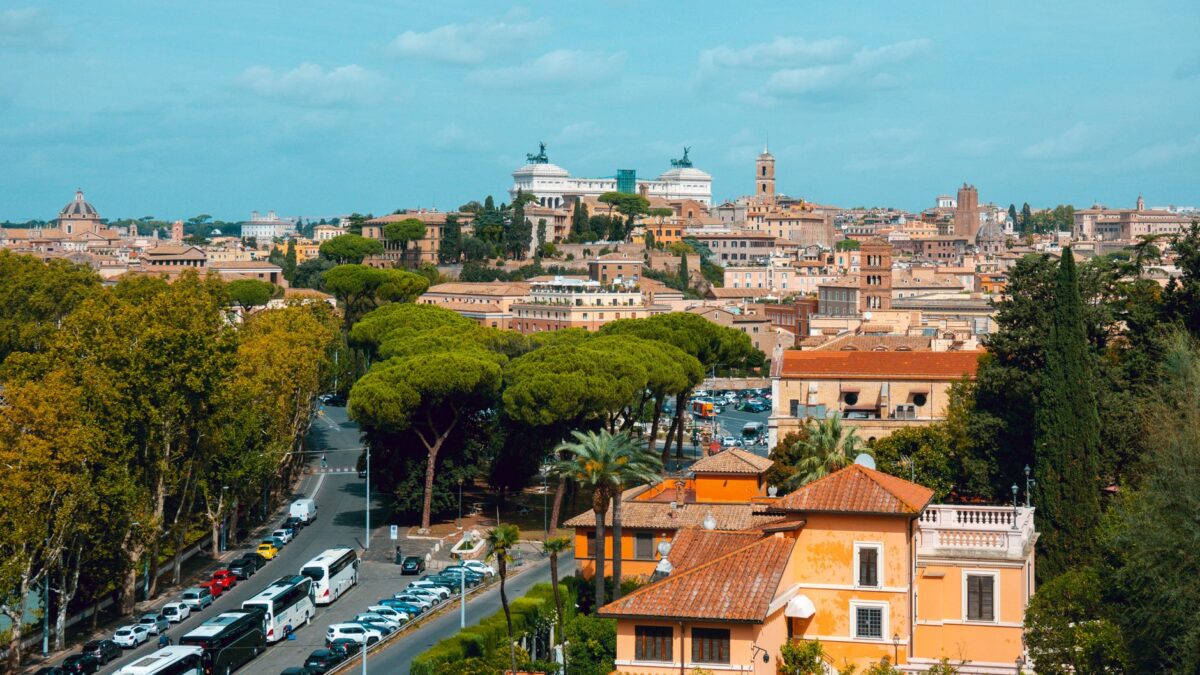
Rome is called the City of Seven Hills because the oldest part of the city, east of the Tiber, grew on seven hills: the Aventine, Caelian, Capitoline, Esquiline, Palatine, Quirinal and Viminal. Tradition says the first settlement stood on the Palatine, and small communities on the other hills later merged into one city. Today city hall sits on the Capitoline and the main archaeological area covers the Palatine.
The hill list and the founding tradition below come from Wikipedia.
Which are the seven hills of Rome?
In Latin the hills are called Collis Aventinus, Collis Caelius, Mons Capitolinus, Collis Esquilinus, Collis or Mons Palatinus, Collis Quirinalis and Collis Viminalis. Italians know them as Aventino, Celio, Campidoglio, Esquilino, Palatino, Quirinale and Viminale. The Caelian was originally called the Mons Querquetulanus.
All seven lie inside the ancient core of the city, the area later enclosed by the Servian Wall and bounded by the pomerium (the sacred boundary of the early city).
Why does Rome have seven hills?
The city did not start as one place. Tradition holds that Romulus and Remus founded it on the Palatine Hill on April 21, 753 BC, and that the seven hills were first occupied by small settlements that were not grouped. Over time the residents began to interact, and the groups bonded. The marshy valleys between the hills were drained and turned into markets, which in Latin are called fora. The Servian Walls, built in the early 4th century BC, were meant to protect the hills.
The date of 753 BC is tradition, not a record. The hills explain the geography, and the founding story explains the legend.
What is on the seven hills today?
Five of the hills, the Aventine, Caelian, Esquilino, Quirinal and Viminal, now hold monuments, buildings and parks. The other two have a clearer public role.
- Capitoline (Campidoglio): the seat of Rome’s city hall, Roma Capitale (the City of Rome).
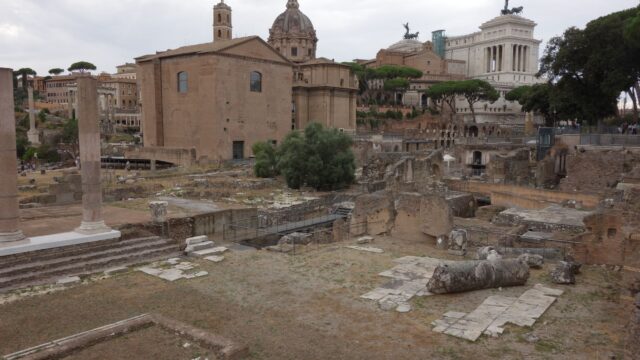
- Palatine (Palatino): part of the main archaeological area, and the hill of the founding story.
- Aventine (Aventino): a quieter hill above the Tiber, with churches, gardens and residential streets.
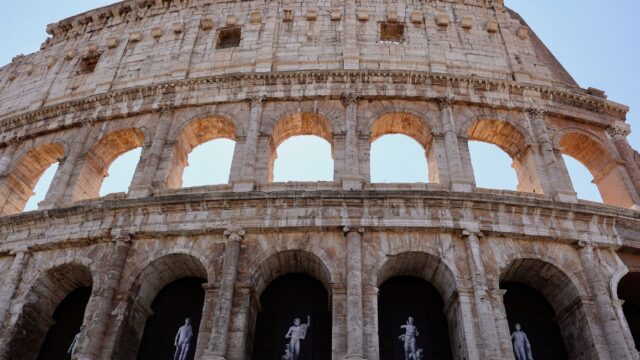
- Caelian (Celio): a green hill near the Colosseum.
- Esquiline (Esquilino): a hill with many churches, next to the area around Stazione Termini.
- Quirinal (Quirinale): home to the presidential palace.
- Viminal (Viminale): home to the Interior Ministry.
Access to individual sites varies, so check opening hours on the official page of each one. Many of these sites also appear in our guides to the obelisks of Rome and the popes who rebuilt the city. If you plan to visit sites such as the Palatine, see which sites are free on museum Sundays.
Which hills are not counted among the seven?
Several well-known hills are outside the traditional list. The Vatican Hill lies northwest of the Tiber, the Pincian Hill lies to the north, the Janiculan Hill (Gianicolo) lies to the west, and the Sacred Mount (Mons Sacer) lies to the northeast. They sat outside the most ancient part of Rome, as marked by the Servian Wall and the pomerium, so they were not counted.
Monte Testaccio is a separate case. It is an artificial hill made mostly of broken amphorae, not a natural one.
What is the Septimontium and why do people confuse it with the seven hills?
The Septimontium was a proto-urban festival celebrated by the residents of seven communities tied to the hills or peaks of early Rome. Its seven names were Oppius, Palatium, Velia, Fagutal, Cermalus, Caelius and Cispius. Those peaks covered a smaller area than the traditional hills. The Cispian, Oppian and Fagutal are three spurs of the Esquiline, the Palatium and Cermalus are peaks of the Palatine, the Velian is a ridge joining the Palatine and Oppian, and the Caelian appears on both lists. People often confuse the two lists because both count seven.
Do other cities claim seven hills?
Yes. Sheffield, Constantinople, Lisbon, Providence and the Massachusetts cities of Worcester, Somerville and Newton are also said to have been built on seven hills, following the example of Rome.
In the Book of Revelation, the Whore of Babylon sits on “seven mountains”, a phrase that Christians have often read as a reference to Rome’s hills and the pagan Roman Empire.
Quick answers
Which hill is the oldest part of Rome?
Tradition points to the Palatine, where Romulus and Remus are said to have founded the city.
Is the Vatican on one of the seven hills?
No. The Vatican Hill is northwest of the Tiber and is outside the traditional seven.
Can you visit the hills on foot?
Yes. The Capitoline and Palatine are close to the Roman Forum, and the other five are reachable on foot or by public transport. Check current opening times for individual sites.
Checked against official sources in November 2026. Hours, prices and rules change: confirm on the official page before you go or apply.