Trevi Fountain History: Who Designed It and When It Opened
Nicola Salvi designed the Trevi Fountain and Giuseppe Pannini finished it in 1762. Read the history, the restorations and today's 2-euro ticket rule.
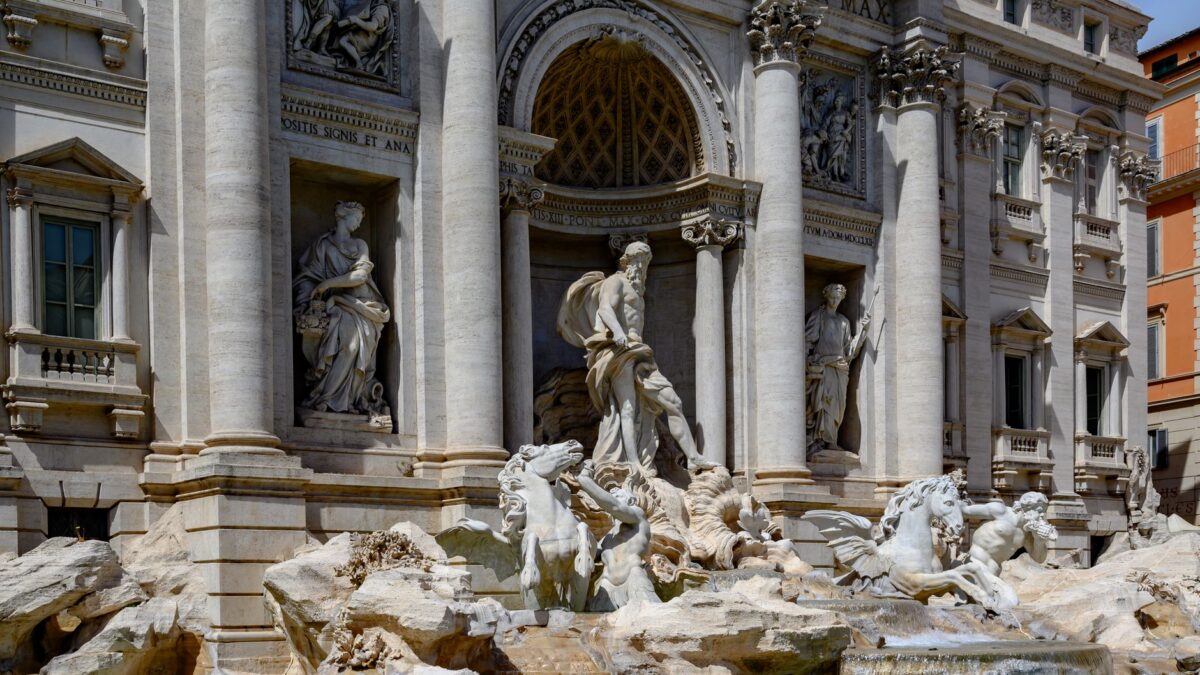
Nicola Salvi designed the Trevi Fountain (Fontana di Trevi), and Giuseppe Pannini completed it in 1762. Construction ran from 1732 to 1762 on a site where a palace already stood, so Salvi built the fountain into the back of that building. The sources used for this guide cover the design, the builders and the restorations. They say nothing about the coin-throwing custom beyond the fact that visitors toss coins into the water, so this page does not retell any coin legends.
Who designed the Trevi Fountain?
Salvi, an Italian architect, got the job after a contest. According to Wikipedia’s article on the fountain, Pope Clement XII held the competition in 1730 and Alessandro Galilei first beat Salvi. Because Galilei was a Florentine, many Romans protested, and Salvi was given the commission anyway. Work started in 1732.
The palace on the site is now the Palazzo Poli. Salvi folded the fountain into its rear wall instead of clearing the ground first.
Who finished it?
Salvi died in 1751 with the work half done. Four sculptors were hired to complete the decoration: Pietro Bracci, Filippo della Valle, Giovanni Grossi and Andrea Bergondi. Bracci made the statue of Oceanus that stands in the central niche. Pannini, the son of Giovanni Paolo Panini, took over as architect and finished the fountain in 1762.
Pannini replaced planned sculptures of Agrippa and Trivia, the Roman virgin, with the allegories seen today. Pope Clement XIII opened the fountain on May 22, 1762.
What came before Salvi’s design?
In 1629 Pope Urban VIII found the earlier fountain too modest and asked Gian Lorenzo Bernini to sketch changes. The pope died and the project was dropped. Bernini’s plan was never built, though the article says many Bernini touches can still be seen in the fountain. Other early proposals included a model by Pietro da Cortona, now kept in the Albertina in Vienna, and designs attributed to Nicola Michetti and Ferdinando Fuga. A French design by Edmé Bouchardon also existed.
Where does the water come from and why is it called Trevi?
The fountain marks the end of the Acqua Vergine, the revived Aqua Virgo, one of the aqueducts that supplied ancient Rome. The name comes from the Latin trivium, an intersection of three streets. The fountain sits where Via De’ Crocicchi, Via Poli and Via Delle Muratte meet. For the aqueduct itself, see our piece on the Roman aqueducts and the Aqua Virgo.
How big is it and what is it made of?
The fountain is 26.3 metres (86 ft) high. Wikipedia gives its length as 49 metres (161 ft) in the info box and 49.15 metres (161.3 ft) in the text, so the figure differs slightly by spot on the page. Most of it is travertine quarried near Tivoli, about 35 kilometres (22 miles) east of Rome.
One detail is easy to miss. Salvi hid a barber’s sign behind a sculpted vase that Romans call the asso di coppe, the “Ace of Cups”, after a Tarot card.
When was the fountain restored?
- 1988: cleaned to remove discoloration caused by smog.
- 1998: stonework scrubbed, cracks repaired and recirculating pumps installed.
- June 2014 to November 2015: a 20-month restoration sponsored by the fashion company Fendi at 2.2 million euros, the most thorough in the fountain’s history. It added more than 100 LED lights for night illumination, and the fountain reopened on the evening of Nov. 3, 2015.
In May 2023, activists from the climate group Ultima Generazione dyed the water with charcoal. Because the water recirculates, cleaning meant emptying and replacing 300,000 litres.
Do you need a ticket to throw a coin today?
Since Feb. 2, 2026, non-residents need a 2-euro ticket to approach the fountain and throw coins into it. Roma Capitale (the City of Rome) introduced the system to manage crowds. Tickets are required from 11 a.m. to 10 p.m. on Mondays and Fridays, and from 9 a.m. to 10 p.m. on the other days. After 10 p.m. the barriers open and entry is free. Details are in our guide to the Trevi Fountain access rules.
City councillor for tourism Alessandro Onorato said the ticket could bring in over six million euros a year. The money would pay for restoration, around 25 stewards and free museum entry for locals.
Quick answers
Who completed the Trevi Fountain?
Giuseppe Pannini finished it in 1762 after Salvi’s death, with sculptors including Pietro Bracci.
Is there a free way to see it?
Access is free for everyone after 10 p.m. The ticket applies to non-residents who want to approach the water.
Where can I read about other Roman fountains?
Our Rome fountains guide covers the Trevi, the Four Rivers and the nasoni.
Checked against official sources in November 2026. Hours, prices and rules change: confirm on the official page before you go or apply.