Sack of Rome in 410: Alaric, the Visigoths and the Fall of the West
On Aug. 24, 410, Alaric's Visigoths sacked Rome, the first foreign capture in almost 800 years. How it happened and how the western empire fell by 476.
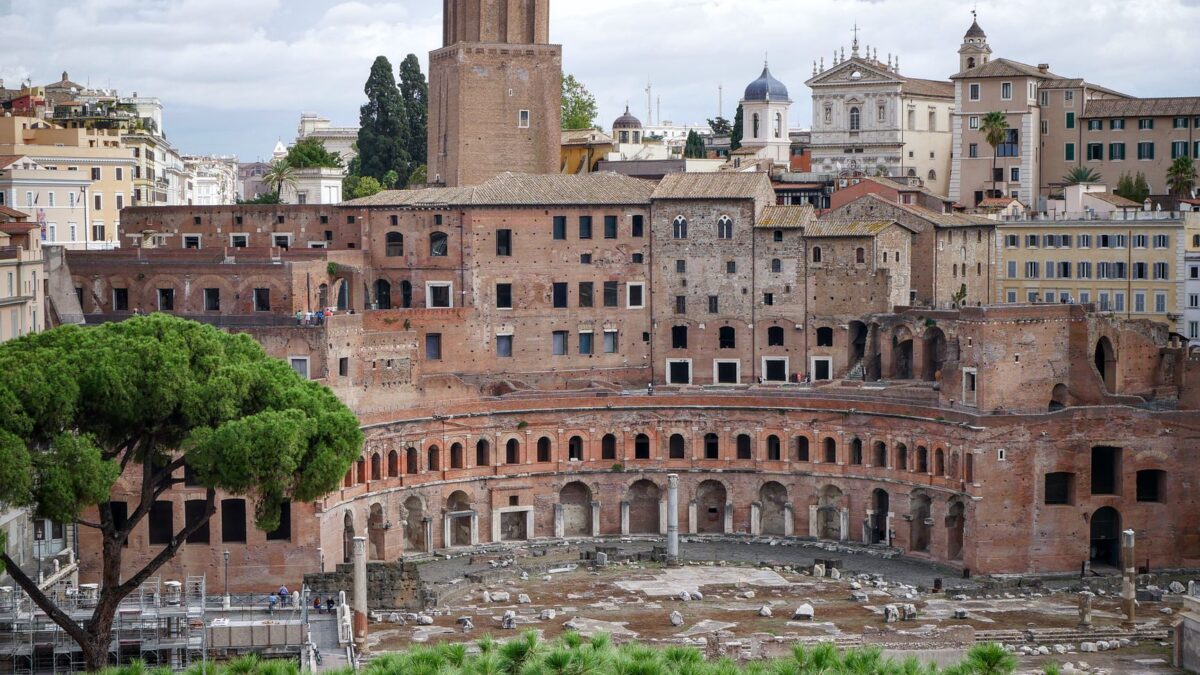
On Aug. 24, 410, the Visigoths under their king Alaric sacked Rome. No foreign enemy had taken the city in almost 800 years, and the news shocked Romans and their rivals alike. Historians see it as a major landmark in the long decline that ended in 476, when the last western emperor in Italy was deposed.
Was Rome still the capital in 410?
Not in an administrative sense. According to the Wikipedia account of the Sack of Rome (410), the western government had moved first to Mediolanum, today’s Milan, in 286, and then to Ravenna in 402. Rome kept its prestige as “the eternal city” and a spiritual center of the empire, which is why its fall hit so hard. Saint Jerome, writing from Bethlehem, said that “the city which had taken the whole world was itself taken.”
The heart of that old prestige was the Forum, and our piece on how a marsh became the Roman Forum traces how the city center took shape centuries earlier.
Who were the Visigoths?
The Goths were one of the Germanic peoples who had lived alongside the empire for four centuries. Over that time their numbers, economies and tribal alliances grew until they could challenge Rome in war. Gothic groups had raided Roman territory on and off since 238.
In 376, pressure from the Huns pushed many Therving Goths, led by Fritigern and Alavivus, to seek refuge inside the Eastern Roman Empire. Hunger, high taxes, local hostility and corrupt officials soon turned them against Rome. They rebelled, and at the Battle of Adrianople in 378 Fritigern’s forces defeated and killed the eastern emperor Valens.
Peace came in 382, when the emperor Theodosius I signed a treaty with the Thervings, who became known as the Visigoths. They settled in the northern parts of the dioceses of Dacia and Thrace as foederati: subjects of the empire who owed military service but ran their own affairs.
How did Alaric rise?
A Gothic chieftain named Alaric was declared king by a group of Visigoths, possibly in 391, though historians disagree on the year and on what his title meant. Jordanes gives 400, while the modern historian Peter Heather says 395. After a failed raid into eastern territory, Theodosius and his general Flavius Stilicho defeated Alaric in 392 and forced him back into Roman service.
In 394 Alaric’s Visigoths fought for Theodosius against the western usurper Eugenius at the Battle of the Frigidus. Around half of the Visigoths there died. Theodosius won, but the Goths suspected Roman generals of letting them take the worst of the fighting, and Alaric resented being denied a higher post.
What happened after Theodosius died?
Theodosius died on Jan. 10, 395, and the Visigoths treated their 382 treaty as over. Alaric gathered the federated Goths along the Danube and marched on Constantinople. The empire was now split between Theodosius’s young sons: Honorius in the West and Arcadius in the East.
A power struggle followed. Stilicho claimed to be guardian of both emperors, while Rufinus, the praetorian prefect of the East, controlled Arcadius. Stilicho twice cornered Alaric in Greece, first in Thessaly and later at Pholoe in 397, and twice withdrew to Italy without finishing him off. Historians still argue over why. In between, Alaric plundered Piraeus, Corinth, Argos and Sparta, while Athens paid a ransom to avoid being sacked. Rufinus himself was killed by soldiers in November 395.
Why did the Western Roman Empire fall?
The fall of the Western Roman Empire was a long loss of central control rather than a single event. Modern historians point to many factors: the size and quality of the army, the health and numbers of the population, the economy, weak emperors, internal power struggles, religious change and the civil administration. Pressure from peoples outside the empire weighed heavily, and climate change and disease drove many of these problems.
After the migration of 376, Roman forces could neither destroy, expel nor absorb the newcomers. When Theodosius died in 395, he left a weakened field army and an empire divided between quarreling ministers. More groups crossed the Rhine and other frontiers, and the western army shrank until central rule could no longer be restored for long.
By 476 the western emperor had almost no military, political or financial power. That year the Germanic king Odoacer deposed Romulus Augustulus, the last western emperor in Italy, and the Senate sent the imperial regalia to the eastern emperor Zeno. The Eastern Roman, or Byzantine, Empire carried on for centuries.
Did Rome really “fall”?
Historians debate the word. Edward Gibbon’s The History of the Decline and Fall of the Roman Empire, whose first volume appeared in 1776, made decline and fall the main frame for Roman history. Henri Pirenne, who lived from 1862 to 1935, argued that Roman culture and economic life continued after 476 and placed the real break in the 8th century, with the Muslim conquests.
Many scholars now use the term late antiquity and describe a long transformation from the ancient to the medieval world. Archaeology points to continuity in material culture and settlement patterns as late as the eleventh century. A 2017 synthesis by the historian Harper names four decisive turns: the Antonine Plague, the Crisis of the Third Century, the military collapse of the West under mass migration, and the Late Antique Little Ice Age with the Plague of Justinian.
Opinions on when decline began vary just as widely. The ancient historian Cassius Dio dated it to the accession of Commodus in 180, while others point to Constantine the Great or to the soldier emperors who ruled from 235 through 284. For the earlier turning point, when the Republic gave way to one-man rule, see our history of how Rome went from Caesar to Augustus.
Quick answers
When was Rome sacked by the Visigoths?
On Aug. 24, 410, by the Visigoths under King Alaric. It was the first time in almost 800 years that a foreign enemy took the city.
Who was emperor when Rome was sacked in 410?
Honorius ruled the Western Roman Empire. His court was based at Ravenna, which had been the western capital since 402.
When did the Western Roman Empire end?
Historians usually date it to 476, when Odoacer deposed Romulus Augustulus, the last western emperor in Italy.
Checked against official sources in November 2026. Hours, prices and rules change: confirm on the official page before you go or apply.