Roman Ghetto History: The 1555 Enclosure, Rules and Demolition
The Roman Ghetto was walled in 1555 on papal orders and stood until 1888. How it began, how it was run and what daily life was like inside.
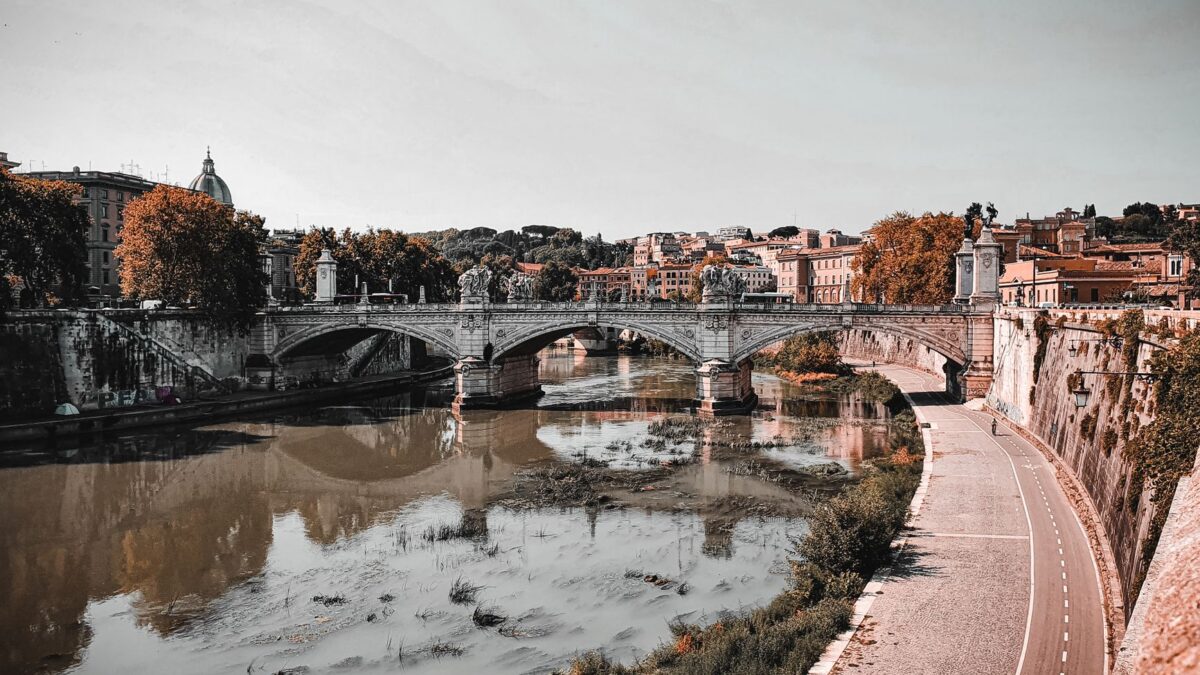
The Ghetto di Roma (Roman Ghetto) was a walled Jewish quarter created in 1555 by Pope Paul IV in the Rione Sant’Angelo, beside the Tiber. It stayed in place until it was demolished in 1888. This guide covers how it started, how it worked and what life inside was like, using the account on Wikipedia’s Roman Ghetto entry.
Where was the Roman Ghetto?
It lay close to the river and the Theatre of Marcellus, in the area bounded today by Via del Portico d’Ottavia, Lungotevere dei Cenci, Via del Progresso and Via di Santa Maria del Pianto. The wall began at Ponte Fabricio and reached the Portico d’Ottavia. From there it followed today’s Via del Portico d’Ottavia, leaving out the old fish market (La Pescheria). At Piazza Giudea it turned again along Vicolo Cenci, now Via del Progresso, until it met the Tiber once more.
At the start the area was a trapezoid. Its two parallel sides measured 270 m near the Tiber and 180 m, and the other sides were about 150 m long. The total area was 3 hectares.
How did the ghetto begin?
Jews have lived in Rome since classical times. The first record dates to 161 BC, and the community is probably the oldest in the world outside the Middle East. In 1442, Pope Eugene IV ordered, in the bull Dudum ad nostram audientiam, that Jews and Christians live fully apart.
The ghetto itself came from the bull Cum nimis absurdum, issued by Paul IV on July 14, 1555. It required the city’s Jews, then about 2,000 people, to move inside the walls. The area was among the least desirable in Rome and flooded repeatedly when the Tiber rose. Jews already made up 80% of its population.
The architect Giovanni Sallustio Peruzzi directed construction of the wall. The Jewish community had to pay its cost of 300 Roman scudi. Gates were locked at night.
What rules governed daily life?
The bull took away the community’s political and social rights and added new limits, including a ban on practising medicine or law. Jews could not own property, even inside the ghetto. Christian owners of houses there kept them, but under the jus gazzagà (right of possession) they could neither evict Jewish tenants nor raise rents.
Religious obligations were forced on residents. Worshippers had to hear Catholic sermons attacking their faith, and every Saturday the community had to sit through sermons urging conversion in front of the church of San Gregorio a Ponte Quattro Capi, just outside the wall.
Work was restricted to unskilled trades such as rag dealing, secondhand dealing and fish selling. Pawnbroking and moneylending, which Christians were barred from, were allowed, and that made Jewish residents a target of insults and violence. In the lottery, Jews could bet only on low numbers, from 1 through 30, all within the same group of 10. When five such numbers were drawn, Romans joked that the ghetto was holding a great feast.
Outside the walls, men had to wear a yellow cloth called the sciamanno, and women a yellow veil. During Catholic feasts, groups were dragged out and made to humiliate themselves for the guests’ amusement. Each year the community also had to pay a tax and swear oaths at the Arch of Titus, and the chief rabbi had to perform a degrading ritual before a city councillor on the Campidoglio. The ritual symbolised permission to remain in Rome for one more year.
How did the ghetto change over time?
Gates were added as the walls grew. There were two at first, three in the 16th century, five under Sixtus V and eight in the 19th century. They opened at dawn and shut one hour after sunset between November and Easter, and two hours after sunset in other months.
The area had hardly any noteworthy buildings. Its one important square, Piazza Giudea, was cut in two by the wall, and every church inside was deconsecrated and demolished soon after the ghetto was built. In the late 1580s, roughly 3,500 people lived there in what the source calls inhuman conditions. There was no fresh water at first, though the popes built several fountains in the rione some years later.
The wall did not stand without interruption. Napoleon’s rule from 1808 to 1815 and the Roman Republic of 1849 briefly ended it, but the papacy otherwise controlled the ghetto until Rome was captured in 1870. The story of that year is covered in our piece on the Porta Pia breach. The ghetto buildings were finally demolished in 1888.
What was the ghetto called?
Documents did not at first use the word ghetto. They called it the serraglio degli Ebrei or the claustro degli Ebrei, both meaning enclosure of the Hebrews. Forms of the word ghetto spread in the late 16th century, and Roman Jews today say ghétte.
Visiting the area today
The streets named above are the best guide to the old footprint. Via del Portico d’Ottavia follows the line of the former wall, and Lungotevere dei Cenci runs along the river side. Check the official pages of any museum or synagogue you plan to enter, since this page gives no hours or prices.
Quick answers
When did the Roman Ghetto open and close?
It was established in 1555 and demolished in 1888, with short breaks under Napoleon and during the Roman Republic of 1849.
Who ordered it?
Pope Paul IV, through the bull Cum nimis absurdum on July 14, 1555.
Who paid for the wall?
The Jewish community, at 300 Roman scudi.
Checked against official sources in November 2026. Hours, prices and rules change: confirm on the official page before you go or apply.