The Lateran Treaty of 1929: How Vatican City Became a State
The Lateran Treaty, signed Feb. 11, 1929, created Vatican City and settled the Roman question. Here is what it said and what changed in 1948 and 1984.
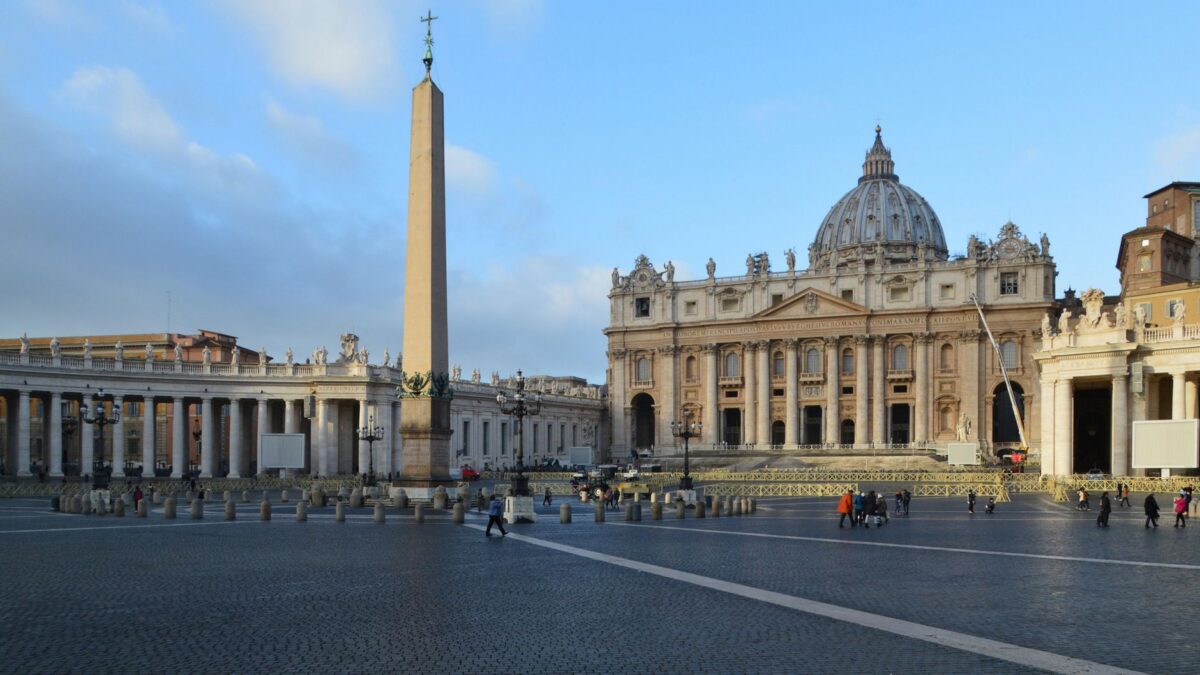
The Lateran Treaty, signed in Rome on Feb. 11, 1929, created Vatican City as an independent state under the sovereignty of the Holy See. It ended the Roman question, the dispute over the pope’s status that began when Italy took Rome in 1870. Italy under King Victor Emmanuel III and Benito Mussolini and the Holy See under Pope Pius XI were the parties, and the Italian Parliament ratified the agreement on June 7, 1929.
According to Wikipedia’s Lateran Treaty page, the treaty is one part of the Lateran Pacts, named after the Lateran Palace where they were signed.
What was the Roman question?
As Italy unified in the 19th century, the Papal States under Pope Pius IX resisted joining the new nation. The Kingdom of Italy took Romagna in 1860, which left the pope only Lazio. Rome itself was annexed in 1870, and for the next sixty years relations between the papacy and the Italian government were hostile.
In 1871 the Law of Guarantees offered the pope the use of, but not sovereignty over, the Vatican and Lateran Palaces and a yearly income of 3,250,000 lire. The Holy See refused, arguing that the pope’s spiritual role needed clear independence from any political power. Each pope afterwards described himself as a “prisoner in the Vatican.” For more on how earlier popes shaped the city, see Renaissance and Baroque Rome.
How were the Lateran Pacts agreed?
Talks between the Holy See and the fascist government led by Mussolini began in 1926. They ended with the signing on Feb. 11, 1929, by Mussolini for the king and by Cardinal Secretary of State Pietro Gasparri for the pope.
The pacts are often described as three texts: a treaty of conciliation with 27 articles, a financial convention with three articles and a concordat with 45 articles. The Holy See’s own website treats the financial convention as an annex of the treaty and counts two documents.
What did the treaty say?
The political treaty recognised the full sovereignty of the Holy See in Vatican City State and came with four annexes: a map of the territory, maps of buildings with extraterritorial privilege and exemption from expropriation and taxes (owned by the Holy See but in Italy, outside Vatican City), maps of buildings with the exemptions but no extraterritorial privilege, and a financial convention.
- The pope pledged perpetual neutrality in international relations and to stay out of mediation unless all parties asked.
- In the first article, Italy repeated the principle from its 1848 constitution that the Catholic religion was the only religion of the state.
- The financial agreement settled all Holy See claims for the loss of the Papal States in 1870. The sum was lower than what Italy had offered in 1871.
- A concordat set out relations between the Catholic Church and the Italian state.
To mark the deal, Mussolini commissioned the Via della Conciliazione (Road of the Conciliation), which was meant to link Vatican City symbolically with the centre of Rome.
What is Vatican City today?
Per Wikipedia’s Vatican City page, the name Vatican City was first used in the treaty. The state covers 0.49 square kilometres and has an estimated population of 882, making it the smallest country by area and the least populous. It sits inside the city of Rome and includes St. Peter’s Basilica, the Sistine Chapel and the Vatican Museums. Visitors planning a trip can read about Vatican Museums tickets and hours.
What changed after 1946?
The Italian republic’s constitution of 1948 says relations between the state and the Catholic Church are regulated by the Lateran Treaties. In 1984 the concordat was significantly revised, and both sides declared that Catholicism as the sole religion of the Italian state was no longer in force.
State financial support for the Church ended and was replaced by the otto per mille, under which taxpayers direct 0.8% of their income tax to a recognised religious group or a state social program. As of 2023, 13 religious groups had access. The Vatican remains a distinct sovereign entity.
Quick answers
Who signed the Lateran Treaty?
Pietro Gasparri signed for the Holy See and Benito Mussolini for Italy, on Feb. 11, 1929.
When did it take effect?
It became effective on June 7, 1929, after the Italian Parliament ratified it.
Is the treaty still in force?
Yes. It was recognised in the 1948 constitution and the concordat was revised in 1984, but the Vatican remains a sovereign entity.
Checked against official sources in November 2026. Hours, prices and rules change: confirm on the official page before you go or apply.