Spanish Steps in Rome: Name, History and Rules
The Spanish Steps in Rome have 135 steps and take their English name from the embassy below. See their history, fines and nearby sights.
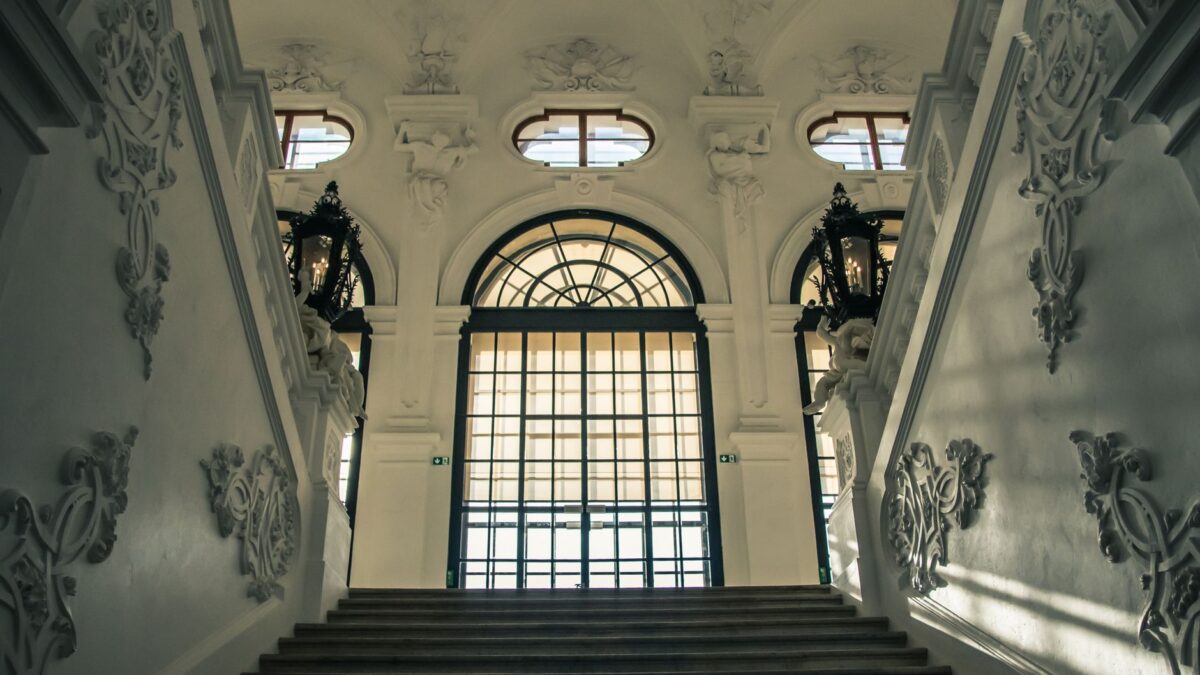
The Spanish Steps (Scalinata di Trinità dei Monti in Italian) are a stairway of 135 steps that climbs a steep slope in Rome, from Piazza di Spagna at the bottom to the church of Trinità dei Monti at the top. The English name comes from the Spanish Embassy to the Holy See, which stands in the Palazzo Monaldeschi at the foot of the stairs. The church above was under the patronage of the Bourbon kings of France, which explains why a French project ended up with a Spanish name.
The facts below come from the Wikipedia article on the Spanish Steps, which is the only source used here.
Why do a French church and a Spanish embassy frame the same stairs?
The two buildings sit at opposite ends of the staircase. Trinità dei Monti crowns the top, on the Piazza Trinità dei Monti, and the embassy anchors the bottom. The French diplomat Étienne Gueffier left money for the stairs, and the embassy gave the English name. The architects Francesco de Sanctis and Alessandro Specchi are credited with the design.
How did the staircase get built?
Debate over how to urbanize the 29-metre slope below the church lasted for generations. Drawings from the 1580s show that Pope Gregory XIII wanted a stair up to the church facade.
The money came later. The French diplomat Étienne Gueffier died in 1660 and left part of his fortune for the stairs. Cardinal Mazarin took a personal interest and gave the project to his agent in Rome, whose plan included an equestrian monument of Louis XIV. That addition caused a furore in papal Rome. Mazarin died in 1661 and the pope in 1667. A nephew also won half of Gueffier’s inheritance in court, and the project sat idle.
Pope Clement XI Albani revived it in the early 18th century. A competition in 1717 was won by Francesco de Sanctis, although Alessandro Specchi was long thought to have produced the winning entry. Construction ran from 1723 to 1725 and the stairs opened in 1725. De Sanctis was favored by the French during the design, and his drawing was engraved in 1726 with a long dedication to Louis XV.
What does the design look like?
The stairway enlarges the conventions of terraced garden stairs. Donato Bramante devised the first divided, symmetrical stairs of this kind for the Belvedere Courtyard in the 1500s, and Michelangelo introduced shaped, angled steps in the vestibule of the Laurentian Library. The sculptural details balance the Bourbon fleur-de-lys against the eagle and crown of Pope Innocent XIII.
What stands around the Spanish Steps?
At the bottom is the Early Baroque Fontana della Barcaccia (the “Fountain of the longboat”), begun in 1627 and finished two years later. It is often credited to Pietro Bernini, father of Gian Lorenzo Bernini, who is more recently said to have collaborated on the decoration. According to a legend, Pope Urban VIII ordered it after a boat was left here by a Tiber flood.
On the right as you begin to climb is the house where the English poet John Keats lived and died in 1821. It is now a museum with memorabilia of the English Romantic generation. Also on the right is a 15th-century palace of Cardinal Lorenzo Cybo de Mari, now Ferrari di Valbona, which was altered in 1936 to designs by Marcello Piacentini. At the top, the stairway leads up the Pincio (the Pincian Hill), and the Villa Medici can be reached from there.
What rules and fines apply on the steps?
Several city administrations have tried to discourage visitors from getting too comfortable here, with bans on loitering and eating that went largely unenforced. In July 2019 the administration of Mayor Virginia Raggi introduced stricter ordinances meant to guarantee decorum, security and legality. They allow fines of €250 for sitting on the steps and up to €400 for dirtying or damaging them, which includes eating on them or pushing a pram up or down. Roman urban regulations forbid eating lunch on the steps, even though they are usually crowded.
How have the steps been restored and damaged?
The steps were already in poor condition in the mid-18th century, according to the writers Joseph de Lalande and Charles de Brosses. They have been restored several times since, including from May to December 1995. The most recent major work was sponsored by Bulgari. It began on Oct. 8, 2015, and the steps reopened on Sept. 21, 2016. About 3,000 square meters of travertine, brick, marble and plaster were restored by more than 80 people, at a cost of €1.5 million.
Damage has continued. In May 2022 a rented Maserati was driven down the first flight, and fractures were later found on the 16th and 29th steps of the right-hand flight. In June 2022 two tourists launched a scooter down the steps three times, which dislodged a 10-centimeter piece of marble and cost €25,000 to repair. Police fined each of them €400 and banned them from the area for two days. In April 2023 protesters from Ultima Generazione poured black powder into the Barcaccia fountain and stained its water and marble.
What happens on the steps during the year?
At Christmas a 19th-century nativity scene is displayed on the first landing. In spring, shortly before the anniversary of Rome’s foundation on April 21, pots of azaleas cover part of the steps until early May. The steps have also hosted a small cut-flower market.
The opening of Italy’s first McDonald’s near the steps in March 1986 inspired Carlo Petrini and friends to form Arcigola, the organization that became the Slow Food movement. For closures and events on the steps, see the article on the Immaculate Conception ceremony and Spanish Steps closures.
Quick answers
How many steps are there?
There are 135, and the stairway is 29 meters high.
Can you sit or eat on the Spanish Steps?
Not without risk. The 2019 ordinances allow a €250 fine for sitting and up to €400 for dirtying the steps, including by eating on them.
Who designed the staircase?
Francesco de Sanctis won the 1717 competition. Alessandro Specchi was long thought to have produced the winning entry and is still named with him as a designer.
Checked against official sources in November 2026. Hours, prices and rules change: confirm on the official page before you go or apply.