Cinecittà and La Dolce Vita: Rome’s Film Golden Age Explained
Cinecittà opened in 1937 and later earned the name Hollywood on the Tiber. How the studios and Fellini's La Dolce Vita shaped Rome's film golden age.
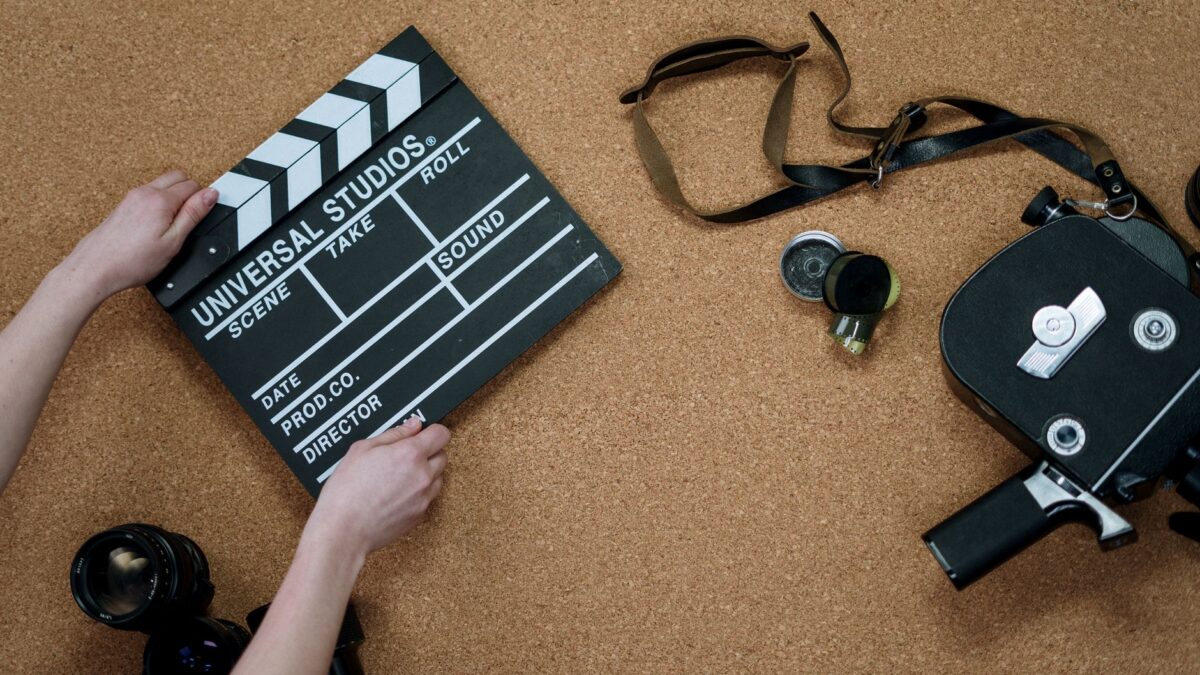
Cinecittà (Italian for “Cinema City”) is the large film studio on the edge of Rome where Italian cinema built its golden age. Benito Mussolini opened it on April 21, 1937. In the 1950s so many international productions worked there that Rome was nicknamed “Hollywood on the Tiber.” Federico Fellini’s La Dolce Vita, released in Italy on Feb. 5, 1960, is the film most closely tied to that era of Roman nightlife and celebrity.
This guide covers how the studios began, what happened to them in the war, which films shaped the golden age, and what Cinecittà looks like today. Facts come from the pages of Cinecittà and La Dolce Vita on Wikipedia.
How did Cinecittà begin?
The studios were founded in 1937 by Mussolini, his son Vittorio and Luigi Freddi, the head of cinema. Their slogan was “Il cinema è l’arma più forte” (cinema is the most powerful weapon). Propaganda was one purpose. The other was to support an Italian feature film industry that had reached its low point in 1931, and to compete with Hollywood.
Early productions showed off the new technology. One of them, Scipio Africanus (1937), involved seven thousand people in its battle scene, and live elephants were brought in for the re-enactment of the Battle of Zama. The lot covers 400,000 square metres (99 acres), which makes it the largest film studio in Europe.
What happened to Cinecittà in World War II?
During the war the complex became a German army barracks. It was stripped of its electrical equipment, and its sound stages were smashed and gutted. For background on the city in those years, see our history of Rome under German occupation in 1943 and 1944.
From 1944 to 1950 the studios served as a refugee camp for displaced people, after the occupation and Allied bombing that damaged parts of the site. An estimated 3,000 refugees lived there in two camps. One housed Italians and displaced people from Italian Libya and Dalmatia. The other was an international camp with refugees from Yugoslavia, Poland, Egypt, Iran and China.
Why was Rome called Hollywood on the Tiber?
After the postwar rebuilding, led by MGM’s Henry Henigson for Quo Vadis, the studios went back to work. Large American productions followed, among them Roman Holiday (1953), Beat the Devil (1953), The Barefoot Contessa (1954) and Ben-Hur (1959). Later came Francis of Assisi (1961), Cleopatra (1963), The Agony and the Ecstasy (1965), Zeffirelli’s Romeo and Juliet (1968) and Fellini’s Casanova (1976).
Fellini’s name is the one most attached to the lot. Teatro 5, the vast stage where he filmed La Dolce Vita and Satyricon (1969), was damaged by a fire in July 2012.
What is La Dolce Vita about?
La Dolce Vita is a 1960 satirical comedy-drama written by Fellini, Ennio Flaiano, Tullio Pinelli and Brunello Rondi. Marcello Mastroianni plays Marcello Rubini, a tabloid journalist who spends seven days and nights moving through the “sweet life” of Rome in a fruitless search for love and happiness. The running time is 174 minutes, and the music is by Nino Rota.
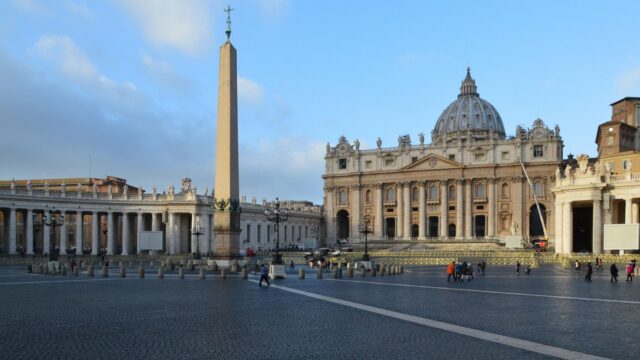
The story moves across Roman places. Marcello’s news helicopter follows a statue of Christ to Saint Peter’s Square. A press conference for a visiting film star takes place after her arrival at Ciampino airport. The night with her ends at the Trevi Fountain, where the two wade in, and a dance party is set in the Baths of Caracalla.
The film won the Palme d’Or at the 1960 Cannes Film Festival and the Academy Award for Best Costumes. It was nominated for three more Oscars, including Best Director for Fellini and Best Original Screenplay. It was a critical and commercial hit worldwide, although some regions censored it.
Where does the word paparazzi come from?
Paparazzo, the news photographer in the film, played by Walter Santesso, is the origin of the word paparazzi, which many languages use for intrusive photographers. In 2008 the Italian Ministry of Cultural Heritage placed the film on its list of 100 Italian films to be saved, films that changed the country’s collective memory between 1942 and 1978.
What has Cinecittà done since then?
The studios hosted the Eurovision Song Contest in 1991 on Stage 15. The contest moved from Sanremo to Rome because of the Gulf War and tension in Yugoslavia, and RAI judged Rome safer. After a period of near-bankruptcy, the Italian government privatized Cinecittà in 1997 by selling an 80% stake.
Fires have struck the lot more than once. A fire on Aug. 9, 2007 destroyed about 3,000 square metres of the lot and surroundings. The historic part with the Ben-Hur sets was undamaged, but many original sets from the HBO and BBC series Rome were lost. A third fire in August 2022 destroyed part of a dismantled set of Renaissance-era Florence.
Productions since the 1990s include The English Patient (1996), Gangs of New York (2002), The Passion of the Christ (2004), Conclave (2024) and Queer (2024). The series Rome was filmed there from 2004 to 2007. Paolo Sorrentino’s The Young Pope and The New Pope were almost entirely shot at Cinecittà, including reconstructions of the Sistine Chapel and Saint Peter’s Basilica. The Italian version of Big Brother, Grande Fratello, also builds its house on the premises.
What is planned for the studios now?
An investment plan funded by the PNRR (Italy’s national recovery plan) covers five new sound stages and the renovation of four others, scheduled for completion by June 2026. That raises the total from 20 to 25 stages and production capacity by 25%. The studios also cite a confirmed 40% international tax credit as a draw for foreign productions.
A separate attraction, the Cinecittà World theme park, opened in July 2014 about 25 km southwest of the studios. It cost €250 million and was designed by Dante Ferretti, a production designer who has won three Academy Awards.
Quick answers
When did Cinecittà open?
Mussolini inaugurated the studios on April 21, 1937.
How many films have been shot at Cinecittà?
According to the Wikipedia page, more than 3,000 movies, of which 90 received an Academy Award nomination and 47 won.
Which Fellini film is linked to Roman nightlife?
La Dolce Vita (1960). Fellini filmed it in Teatro 5 at Cinecittà, and its story follows a journalist through Rome’s nights over seven days.
Checked against official sources in November 2026. Hours, prices and rules change: confirm on the official page before you go or apply.