Sack of Rome in 1527: How Imperial Troops Took the City
Imperial troops stormed Rome on May 6, 1527, and Pope Clement VII fled to Castel Sant'Angelo. Here is how the sack unfolded and what followed.
Rome was sacked on May 6, 1527, when the unpaid and mutinous soldiers of Charles V, Holy Roman Emperor, broke through the walls of a city that was barely defended. They looted, killed and took citizens for ransom, and Pope Clement VII survived only by reaching Castel Sant’Angelo. The occupation lasted until February 1528. By then Rome’s population had fallen from 55,000 to 10,000, according to Wikipedia’s article on the sack.
Why did imperial troops attack Rome in 1527?
The attack grew out of the War of the League of Cognac. Clement VII feared the rising power of Charles V, who was also King of Spain, and allied with the emperor’s enemy, King Francis I of France. The alliance, called the League of Cognac, also included the Duchy of Milan, the Republic of Venice, the Republic of Genoa and the Florence of the Medici.
The League’s first campaign, against the Republic of Siena in 1526, failed and exposed how weak the pope’s own troops were. The imperial army then beat the French, but there was no money to pay its soldiers. They mutinied and forced their commander, Charles III, Duke of Bourbon, to lead them towards Rome. Charles V had meant only to threaten the pope into accepting his terms, and the army had been ordered not to storm the city.
Who was in the imperial army?
The force was a mix of nationalities and beliefs. It included 14,000 Germans (Landsknechte under Georg von Frundsberg, some of them Lutherans) and 6,000 Spaniards, plus Italian infantry and cavalry under several commanders. Martin Luther himself opposed an attack on Rome and on Clement VII, but some of his followers saw the papal capital as a legitimate target for religious reasons. Outlaws and deserters from the League joined the column on its march.
The Duke of Bourbon left Arezzo on April 20, 1527, while the League’s side was in disarray after a revolt in Florence against the pope’s Medici family. He told Clement he could not stop his army and was being dragged along like a prisoner. Contemporary eyewitnesses and historians doubted that. His troops sacked Acquapendente and San Lorenzo alle Grotte, occupied Viterbo and Ronciglione, and reached the walls of Rome on May 5.
How did the city fall on May 6?
Rome’s defenders were far fewer than the attackers: about 5,000 militiamen under Renzo da Ceri and 189 Papal Swiss Guards. The city had the massive Aurelian Walls and substantial artillery, which the imperial army lacked. Bourbon still had to move fast, because a long siege risked trapping him between the city and the League’s army.
On May 6 the imperial troops attacked the walls at the Gianicolo (Janiculum) and Vatican hills. Bourbon was fatally wounded in the assault, wearing a white cloak that made him easy to spot. The artist Benvenuto Cellini, who helped defend Rome, claimed in his own account to have fired the shot. With their last respected leader dead, the soldiers lost what restraint they had and stormed the walls the same day. Philibert of Châlon took command but had little authority over them.
What happened to the Swiss Guard and the pope?
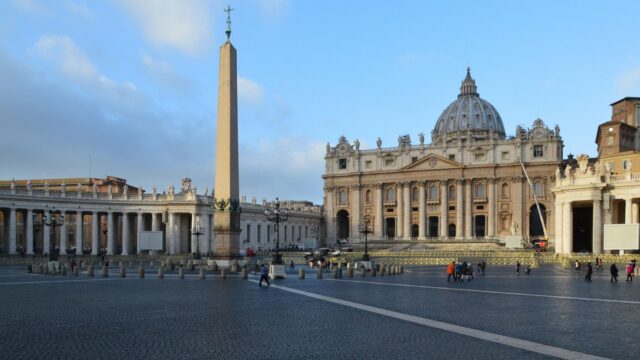
The Swiss Guard and the garrison’s remaining soldiers made a last stand in the Teutonic Cemetery inside the Vatican. Their captain, Kaspar Röist, was wounded, retreated to his house and was killed there by Spanish soldiers in front of his wife. Survivors fell back to the steps of St. Peter’s Basilica, where most were massacred. Only 42 survived. Under Hercules Goldli, that group held off the pursuing troops while the pope’s entourage crossed the Passetto di Borgo, the raised passage linking Vatican City to Castel Sant’Angelo.
Clement VII sheltered in the castle and stayed until a ransom was paid to the pillagers. The Swiss Guard’s last stand is known as the Stand of the Swiss Guard.
What did the soldiers do in the city?
About 1,000 defenders of the papal capital and its shrines were executed, and then the pillage began. Churches, monasteries and the palaces of prelates and cardinals were looted and destroyed. Even cardinals who backed the emperor had to pay to protect their property. Women were raped, patients in hospices were killed, and many prominent allies of the imperial cause were not spared. Citizens were also seized and held for ransom.
How did the occupation end?
The army did not leave until February 1528. A plague outbreak and the approach of League forces under Marshal of France Odet de Foix pushed it to withdraw towards Naples. Atrocities, famine, plague and flight had cut Rome’s population from 55,000 to 10,000. The League army was later lost at the Siege of Naples, which secured victory in the war for Charles V.
The emperor denied responsibility for the sack and came to terms with Clement VII again. The episode deepened religious hatred between Catholics and Lutherans.
Where can you trace this history in Rome today?
Castel Sant’Angelo, the Passetto di Borgo, St. Peter’s Basilica and the Gianicolo all appear in the events above, so a walk between them covers most of the story. The Aurelian Walls still run through parts of the city. For earlier layers of the city, see the piece on how the Roman Forum grew from a marsh, and for monuments that survived many such upheavals, the guide to Rome’s 13 obelisks.
Quick answers
When was Rome sacked?
Imperial troops captured Rome on May 6, 1527. The occupation ended in February 1528.
Who was Rome’s pope at the time?
Clement VII. He took refuge in Castel Sant’Angelo and remained there until a ransom was paid.
Did Charles V order the attack?
No. He intended only to threaten military action to make the pope accept his terms, and he later denied responsibility for the sack.
How many Swiss Guards survived the stand?
Only 42 survived. They had fallen back to St. Peter’s Basilica and then helped cover the pope’s escape along the Passetto di Borgo.
Checked against official sources in November 2026. Hours, prices and rules change: confirm on the official page before you go or apply.