Roman Aqueducts and the Aqua Virgo: The Water Behind the Trevi
The Aqua Virgo, finished in 19 BC by Agrippa, is the ancient aqueduct linked to the Trevi Fountain. How Rome's eleven aqueducts worked and its route.
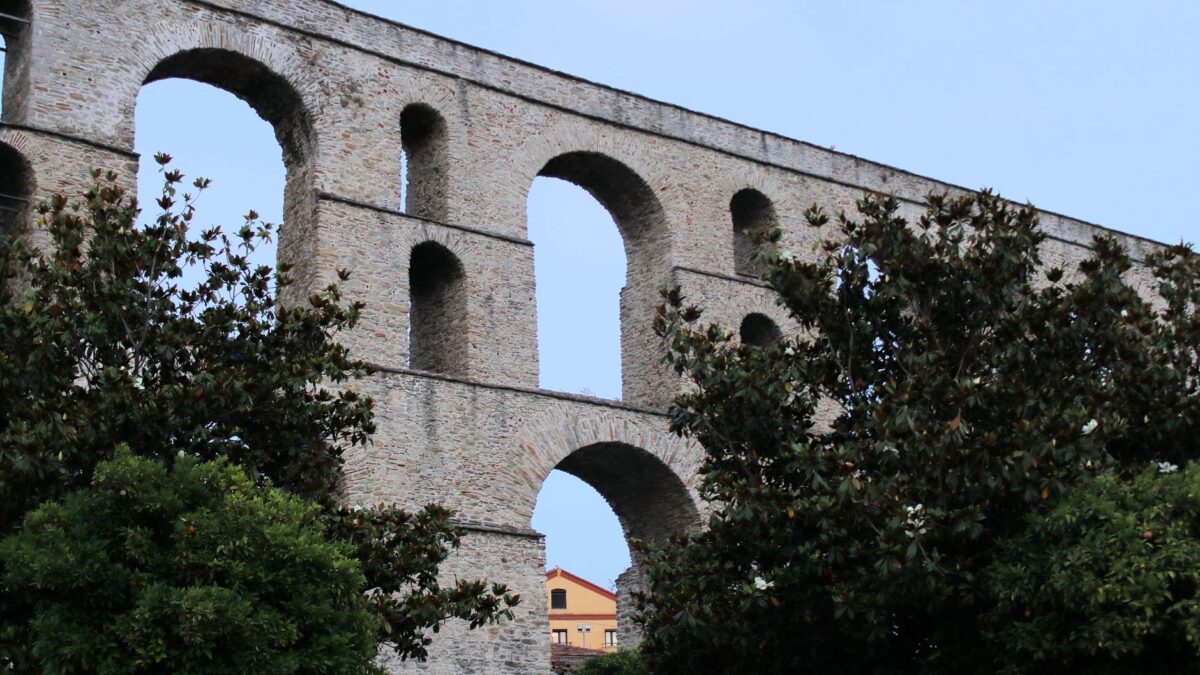
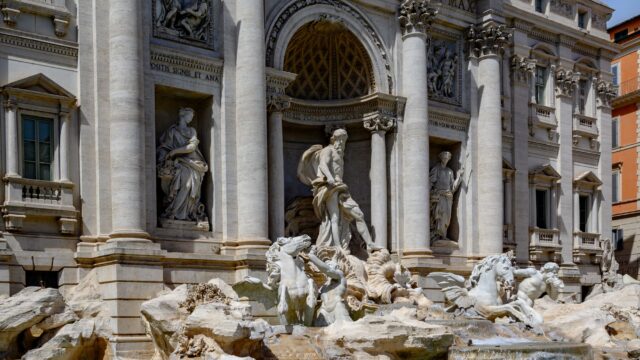
Ancient Rome drew its water from eleven aqueducts, built between 312 BC and 226 AD, which carried spring water into the city using nothing but gravity. One of them, the Aqua Virgo, was completed in 19 BC by Marcus Agrippa and runs through the area of the Trevi Fountain. Its channel was repaired by emperors and popes for centuries, and in 1453 Pope Nicholas V restored both the conduit and the fountain.
Why did Rome need aqueducts?
Before aqueducts, Romans depended on springs, streams, wells and rainwater collected from roofs in jars and cisterns. Those local supplies limited how far the city could grow. The Tevere (Tiber) was close by, but its water carried disease.
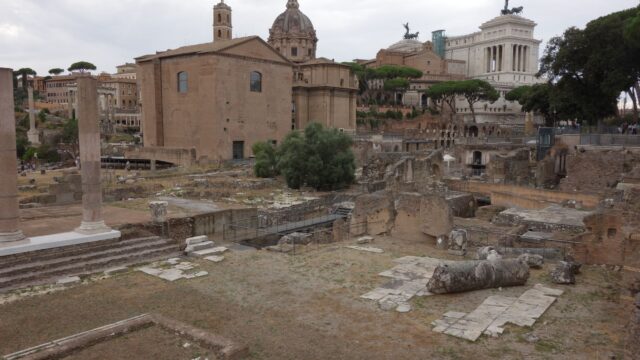
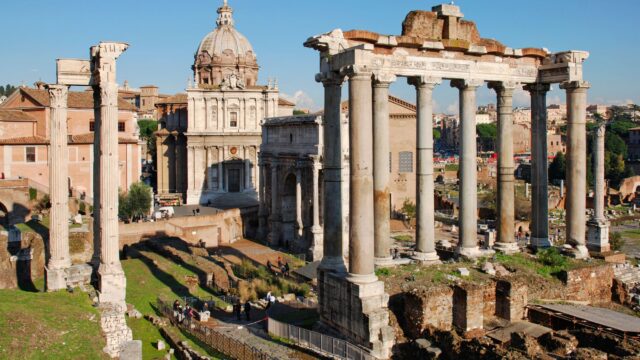
The city probably needed more water than it had long before 312 BC, when the censor Appius Claudius Caecus commissioned the first aqueduct, the Aqua Appia. It was built at the same time as the first stretch of the Via Appia, the military road toward Capua. The Aqua Appia started at a spring 16.4 km from Rome, fell 10 m along its course and delivered about 75,500 m3 of water a day to a fountain in the Forum Boarium, the cattle market and one of the lowest public spaces in the city. If you want more on how that low ground was turned into a civic centre, see our account of how the Roman Forum grew out of a marsh.
By the 3rd century AD, the eleven aqueducts supported a population of over a million, and most of the water went to public baths. According to the Wikipedia article on Roman aqueducts, public fountains had first claim on the supply, then the baths, then wealthy private users who paid fees.
Which aqueducts supplied ancient Rome?
The city’s aqueducts and the dates they were completed:
- Aqua Appia, 312 BC
- Aqua Anio Vetus, 272 BC
- Aqua Marcia, 144-140 BC
- Aqua Tepula, 127-126 BC
- Aqua Julia, 33 BC
- Aqua Virgo, 19 BC
- Aqua Alsietina, 2 BC
- Aqua Claudia, 38-52 AD
- Aqua Anio Novus, 38-52 AD
- Aqua Traiana, 109 AD
- Aqua Alexandrina, 226 AD
The Anio Vetus was paid for with treasure taken from Pyrrhus of Epirus and carried more than twice the flow of the Appia. In 145 BC an official commission found the old conduits decayed and losing water to leaks and illegal taps. The praetor Quintus Marcius Rex repaired them and added the Aqua Marcia, the longest of the city’s aqueducts and high enough to reach the Capitoline Hill. Under the emperors, the Aqua Alsietina brought non-drinking water to Trastevere for gardens and for an artificial lake used for staged sea battles, and the Aqua Claudia ran for 69 km.
How did water flow without pumps?
Every Roman aqueduct relied on a slight, steady downhill slope from source to city. Most of the channel ran underground and followed the shape of the land, going around hills rather than through them where possible. Across valleys the water rode on bridges of arches or passed through pressurised pipes of lead, ceramic or stone that worked as siphons.
The channels were usually built by “cut and cover”: workers dug a trench, built the conduit and covered it, which kept it reachable for repairs. Floors and walls were lined with cement up to the expected water level, since channels were meant to run about a half to two thirds full. Builders kept the gradient shallow so the water moved slowly and did less damage; inside tunnels they could make it steeper. Arches came mainly at the end of a route, and some later ones stood as high as 27 metres.
Along the way, settling tanks caught debris, and distribution tanks called castella aquae, with sluices and stopcocks, divided the flow among users. Vitruvius described surveying and building methods in De architectura in the 1st century BC, and the general Frontinus later wrote an official report on how the city’s water was used and abused.
What made the Aqua Virgo different?
The Aqua Virgo was built during the reign of Augustus mainly to feed the Baths of Agrippa in the Campus Martius. Its name comes from a story that a young girl led thirsty soldiers to the spring that became its source. It could carry 100,160 m3 of water a day.
The source lies just before the 8th milestone, north of the Via Collatina, where springs near the Aniene river were gathered through underground tunnels into a basin and released into the channel by a dam. That spring system still works and can be inspected.
The aqueduct ran underground for almost all of its 20.5 km. Only the final 1,800 m, in the Campus Martius, stood partly on arches, and two sections of them survive. Over its whole length it dropped just 4 m.
Which route did it take into the city?
Because the source sat only 24 metres above sea level, the builders avoided the steep slopes of a direct line and took a long arc. The channel followed the Via Collatina to the Portonaccio area, crossed Via Nomentana to Via Salaria, then turned south and entered the city from the north under the Horti Lucullani. From there it ran 1.2 kilometres to the Pincian Hill near today’s Villa Medici, where a spiral staircase known as the Pincio snail leads down to the underground conduit.
The detour also brought water to the northern suburb, which had none until then, and let the aqueduct reach the Campus Martius without crossing crowded districts. After a settling basin near the Pincian, the city stretch continued partly on arches, many of them found in 1871. It passed through the area of the Trevi Fountain, crossed what is now Via del Corso on an arch later turned into a triumphal arch for Claudius’s victories in Britain, and ended in front of the Saepta Julia. A side branch crossed the bridge of Agrippa to serve Trastevere.
Frontinus recorded how its water was shared: 200 quinaries for the suburbs, 1457 for public works, 509 for the imperial house and 338 for private grants, all through 18 distribution cisterns.
How did the Aqua Virgo survive to reach the Trevi?
The channel needed constant care. Tiberius repaired it in 37 AD and Claudius between 45 AD and 46 AD; an inscription on Via del Nazzareno records that Claudius rebuilt sections after Caligula took stone from them for an amphitheatre. Constantine the Great and Theodoric also carried out repairs.
The first major break came in 537 AD, when the Goths besieged Rome, yet the aqueduct kept supplying water under Byzantine rule. Pope Adrian I restored it in the 8th century, and Pope Nicholas V repaired the channel extensively in 1453 together with the Trevi Fountain. In the 1930s a separate pressurised line, the Acqua Vergine Nuovo, was built alongside the older channels.
Before you visit the fountain itself, check the current Trevi Fountain basin ticket, hours and rules.
Quick answers
When was Rome’s first aqueduct built?
In 312 BC. The Aqua Appia, commissioned by Appius Claudius Caecus, ended at a fountain in the Forum Boarium.
Who built the Aqua Virgo?
Marcus Agrippa completed it in 19 BC, during the reign of Augustus, mainly to supply his baths in the Campus Martius.
How long is the Aqua Virgo?
About 20.5 km, almost all underground, with a fall of only 4 m from source to end.
Can you see any of it today?
Two sections of its arches survive in the Campus Martius area, and the spiral Pincio snail staircase near Villa Medici leads to the underground conduit. Check access on the official page of the site before you go.
Checked against official sources in November 2026. Hours, prices and rules change: confirm on the official page before you go or apply.