How Rome Was Founded: Romulus and Remus Against the Archaeology
Legend says Romulus founded Rome on the Palatine in 753 BC. Archaeology shows hilltop villages that slowly merged. Here is how the two stories compare.
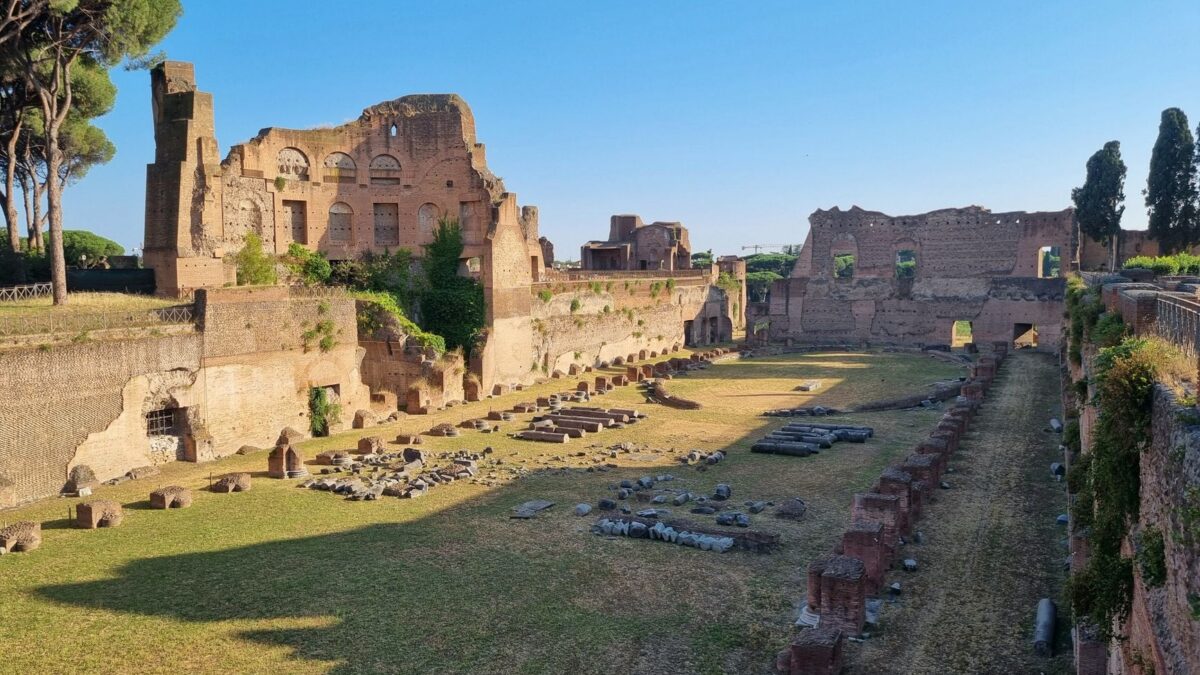
According to Roman legend, Romulus founded Rome on the Palatine Hill after killing his twin brother Remus, and Roman writers placed the date around 753 BC. Archaeology tells a slower story: people lived in the area by around 1600 BC, and Rome grew out of several hilltop villages that joined into a single community by the later 8th century BC. Most modern historians treat the idea of one founder starting the city in one particular year as fiction.
What does the legend of Romulus and Remus say?
In the myth, the twins were born in Alba Longa, one of the old Latin towns near the seven hills. Their mother, Rhea Silvia (also called Ilia), was a Vestal Virgin and the daughter of Numitor, a king pushed off the throne by his brother Amulius. Some versions make the war god Mars their father.
Amulius saw the babies as a threat and had them left on the bank of the Tiber to die. The river god Tiberinus saved them, a she-wolf suckled them in a cave later called the Lupercal, and the shepherd Faustulus raised them. As young men they were caught up in a quarrel between the followers of Numitor and Amulius. Remus was captured and taken to Alba Longa, Romulus came to free him, and the brothers learned who they were. Amulius was killed and Numitor became king again.
The twins then went back to the seven hills to build their own city and could not agree where. Romulus wanted the Palatine, above the Lupercal, and Remus wanted the Aventine. They settled it by augury, watching for birds as signs from the gods. Remus saw 6 birds first, Romulus saw 12, and each claimed the win. Remus mocked the new city and was killed, by Romulus or by one of his men. Romulus became the first king and, in the story, created Rome’s institutions, army and religious customs.
Where does the 753 BC founding date come from?
Ancient historians calculated the year in different ways. Two dates had something close to official status: 753 BC, from the chronology of the scholar Varro, used for the Secular Games of Claudius and the Romaea of Hadrian, and 752 BC, used in the Fasti and for the Secular Games of Antoninus Pius and Philip the Arab. Varro’s calculations contain known errors, yet 753 BC is still the starting point for most modern reckonings of the AUC era (years counted “from the founding of the city”).
Romans marked the birthday with the Parilia festival on April 21. Its link to the founding grew under the Empire, and in AD 121 the festival was turned into the Romaea.
How old is the legend itself?
The story is set before 753 BC, but the earliest known written account dates from the late 3rd century BC. The image of the she-wolf feeding the twins has been a symbol of Rome since at least the 3rd century BC. Scholars still debate whether the twins belonged to Rome’s original myths or were added later, and whether the elements came from the Romans’ own Italic background or from Greek influence.
The ancient versions often contradict each other. The best known are by Livy, Dionysius of Halicarnassus and Plutarch, all of whom drew on the earlier historian Quintus Fabius Pictor. Ovid’s poem the Fasti, from the early 1st century AD, tells the whole tale and adds a scene in which the ghost of Remus visits Faustulus and his wife. Fragments of Cassius Dio even mention “another Romulus and Remus” and an older Rome on the same site.
What does archaeology show about early Rome?
Excavations point to gradual growth over many centuries. There is evidence of people in the area of modern Rome from at least 5,000 years ago, although later debris hides most older sites. In the wider region, at Lavinium and on the coast near Ardea, traces of settlement go back to the 15th century BC.
Geography explains the choice of site. In the Bronze Age, the Forum Boarium, north of the Aventine, was a seasonally dry plain with a safe river port and a shallow, slow ford over the Tiber, one of the main crossings between Etruria and Campania. The steep Capitoline next to it worked as a natural citadel and helped control salt production along the river. The other hills and the marshes between them offered further defensible spots.
The finds build up in layers:
- Some evidence on the Capitoline may date from c. 1700 BC, and three separate bronze-using settlements appear on the Capitoline between 1700 and 1350 BC.
- The valley that later held the Roman Forum was settled from 1350 to 1120 BC.
- Structures from the 13th century BC show the Capitoline slope already being terraced.
- From about 1200 to 975 BC, the Final Bronze Age, there is clear occupation of the Capitoline, the Forum and the Palatine.
- By 1000 BC the Forum held a cemetery for cremation burials, and around 900 BC, in the early Iron Age, graves began to be dug into the ground.
- By the 9th century, cemeteries also appear on the Esquiline, Quirinal and Viminal hills, with pottery, Greek imports, brooches called fibulae and bronze objects.
- Remains of huts on the Palatine date from the 9th or 8th centuries BC.
Excavations near today’s Capitoline Museums suggest that fortifications were built there. The Capitoline currently looks like the earliest settled hill. Researchers disagree on whether the villages on the other hills were independent, offshoots of the Capitoline, or already part of one community.
So where do legend and evidence meet?
Both accounts put early Rome on the hills beside the Tiber, and the Palatine, Romulus’s hill in the legend, did have huts in the 9th or 8th centuries BC. The merging of the hilltop settlements into one community by the later 8th century BC also falls close to the traditional 753 BC date. That merger was probably influenced by the rise of city-states in ancient Greece.
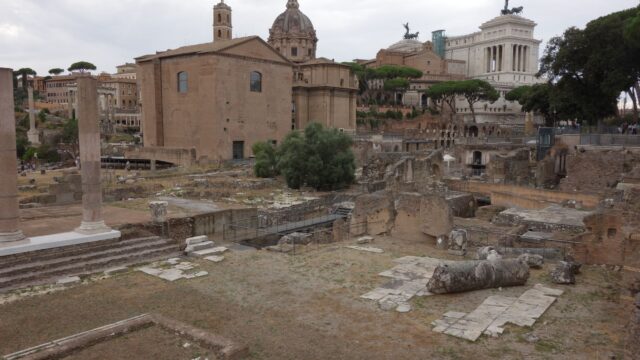
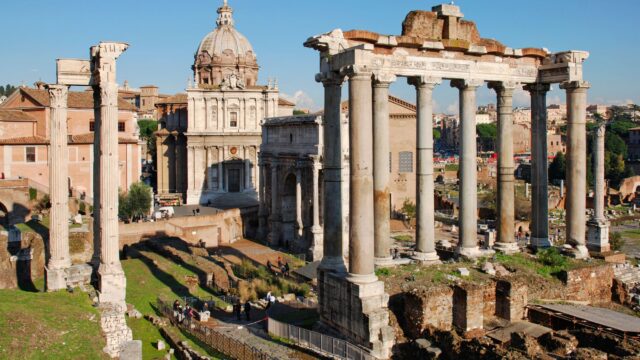
Where they part company is the idea of a single moment. Archaeology shows Rome forming over several centuries, with the Capitoline settled before the Palatine, which is why most modern historians reject the story of one founder of Trojan descent creating the city in a single year. You can walk over the places in question on a visit to the Roman Forum and Palatine Hill, where the Forum valley and the Palatine slopes sit side by side. Both versions are set out in more detail in Wikipedia’s articles on the founding of Rome and on Romulus and Remus.
Quick answers
Who founded Rome according to legend?
Romulus, son of Mars and Rhea Silvia, founded the city on the Palatine Hill after the death of his twin Remus and became its first king.
What was Rome’s birthday in ancient times?
April 21, the day of the Parilia festival, which Romans of the late Republic already treated as the anniversary of the founding.
Which hill was settled first?
Current evidence points to the Capitoline, with bronze-using settlements there from 1700 BC. Clear occupation of the Palatine comes later, in the Final Bronze Age.
What is the Lupercal?
It is the cave below the Palatine where, in the legend, the she-wolf suckled Romulus and Remus.
Checked against official sources in November 2026. Hours, prices and rules change: confirm on the official page before you go or apply.