Catacombs of Rome: How Early Christians Buried Their Dead
The catacombs of Rome were underground cemeteries dug outside the city walls from the 2nd century. Why they were built, who used them and what myths to drop.
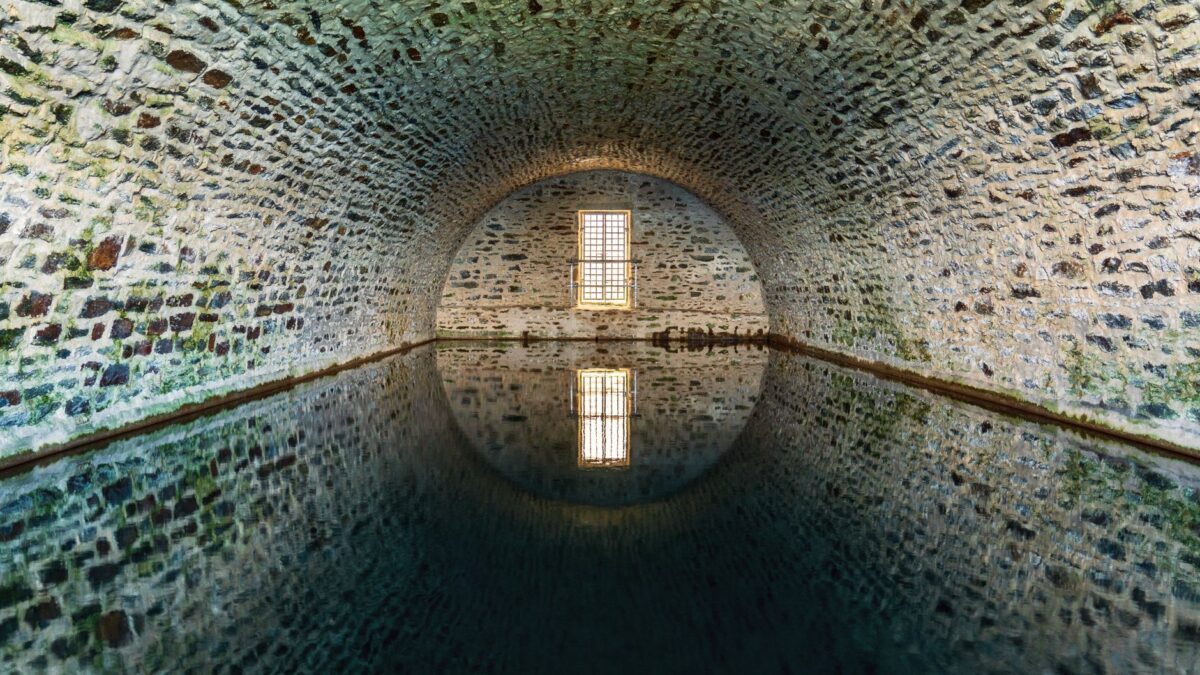
The catacombs of Rome (Catacombe di Roma) are underground burial places dug outside the ancient city walls, mostly from the 2nd century onward. Early Christians used them to bury their dead, and so did Jews and followers of several pagan Roman religions. They were cemeteries first, and the popular picture of secret churches below the streets is largely a later idea.
The details below come from the Wikipedia article on the Catacombs of Rome, which summarizes the scholarship. Opening hours and tickets are not covered there, so check them with the individual site before you go.
What exactly are the catacombs of Rome?
They are a network of subterranean burial chambers in and around Rome. Some were rediscovered in 1578, and others only as late as the 1950s. Nobody knows exactly how many exist. A count in 2012 noted more than 40 Christian catacombs and 6 Jewish ones, while the article says that in 2026 there are over 60 known catacombs in the city.
All of the Christian catacombs belong to the Catholic Church, and archaeologists need permission to explore new ones. The best known is the Catacomb of Callixtus (Callisto), near the Park of the Caffarella. Others lie along the main roads out of the city, including the Via Appia, the Via Ostiense, the Via Labicana, the Via Tiburtina and the Via Nomentana. Some are now surrounded by modern suburbs.
Why did people bury their dead underground?
Roman law banned burials inside the city walls, so every cemetery sat outside them. In the 2nd century Rome also had two practical problems: too many people and too little land. The city was growing, and many buildings were four or five stories tall.
The older Roman custom was cremation, with the ashes kept in an urn or a chest, often in a columbarium. Early Christians did not accept cremation, and Jews and Christians both preferred burial because they believed in preserving the body for the resurrection. Monumental tombs along roads such as the Via Appia cost a fortune. Digging galleries into the ground was cheaper.
From about the 2nd century AD, burial of unburnt remains became customary, in plain graves or, for those who could pay, in carved sarcophagi. By the 4th century burial had overtaken cremation as the usual practice.
How were the tunnels dug?
The first large catacombs near Rome were cut from the 2nd century. Builders worked in tufa (tuff), a volcanic rock that is soft enough to dig and hardens afterward. The name itself comes from Late Latin. One reading of catatumbas is “among the tombs”, and another is “next to the quarry”, which points to the early excavations made near a quarry outside Rome.
Earlier peoples in the area also used underground chambers. The Etruscans, who controlled the territory that includes Rome from perhaps 900 to 100 BC, buried their dead in excavated rooms such as the Tomb of the Capitals. Anyone interested in how Rome later dug under its own streets can read our piece on the history of the Rome metro.
Did Christians hide in the catacombs from persecution?
Probably not in the way the legend says. The historian L. Michael White, cited in the article, argues that Christians did not use the catacombs to hold secret worship during persecutions. His reasons are that the Roman Empire did not persecute Christians on a regular basis, and that the larger rooms were not used for regular worship, the Eucharist or assemblies.
White says those rooms, some with benches along the walls, were used for meals for the dead, a practice common among most Roman families. The tunnels were probably used for burial alone at first. Memorial services and celebrations of the anniversaries of martyrs did take place there, extending older Roman customs.
The article adds that about 80% of the excavations used for Christian burials date from after the time of the persecutions. Names such as St. Calixtus and St. Sebastian, the latter beside the Via Appia, refer to martyrs who may have been buried there.
What do the catacombs tell us today?
The Christian catacombs hold the great majority of surviving examples of early Christian art from before about 400 AD, in fresco and sculpture, along with gold glass medallions. Most of the medallions, like most of the bodies, have been removed. The art shows how Christians in the first centuries pictured the world and how they thought it should be, and it reflects differences in social status among communities.
Jewish catacombs matter in the same way for the study of Jewish culture in that early period. Chemical analysis of remains has also shown that the population ate freshwater fish. A sample from a child of about two years suggests the child was still being breastfed. Fish was a daily staple, appeared as a symbol in Christian imagery and was eaten at meals held to remember the dead.
Quick answers
Who owns the Christian catacombs?
The Catholic Church owns all of the Christian catacombs in the city. Archaeologists must get permission before exploring new ones.
Why are the catacombs outside the city walls?
Roman law forbade burial inside the city limits, so cemeteries of every kind were placed outside, usually along the main roads.
Were the catacombs only for Christians?
No. Jews and followers of several pagan Roman religions were buried in catacombs too, starting in the 2nd century.
Checked against official sources in November 2026. Hours, prices and rules change: confirm on the official page before you go or apply.