Marina Abramović Brings 200 Works to Rome’s Galleria Nazionale
Marina Abramović's largest show opens at Rome's GNAMC with about 200 works until April 4, 2027. Dates, highlights and her Arch of Janus installation.
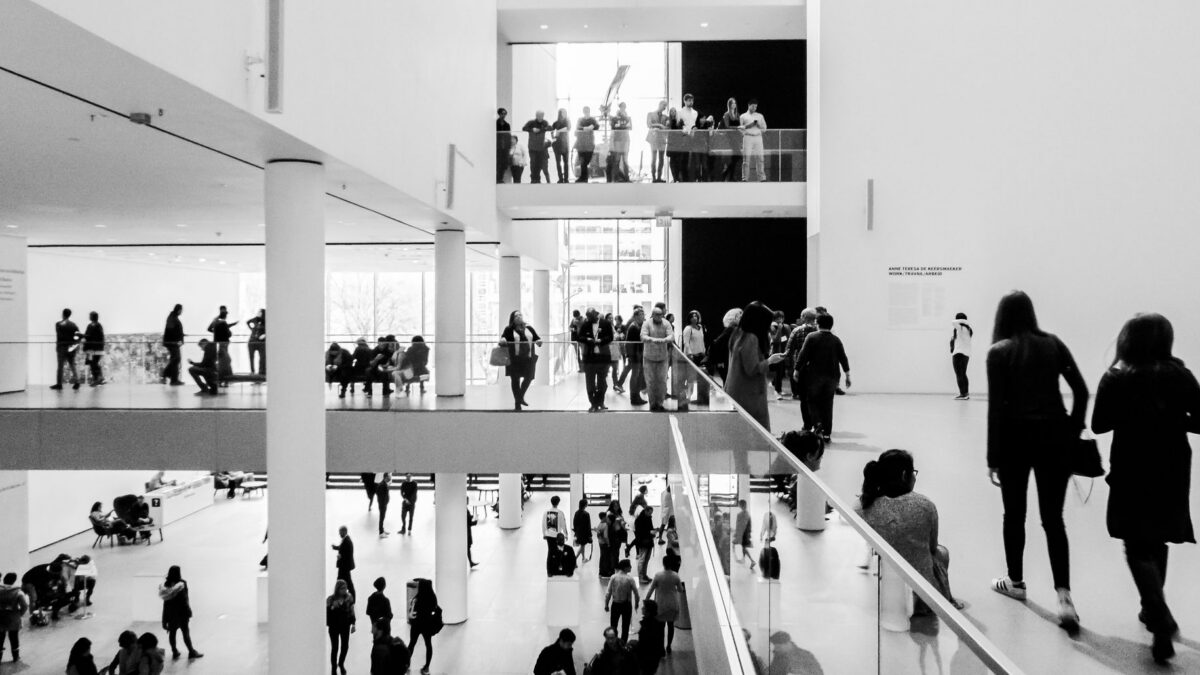
Performance artist Marina Abramović has opened what she calls the most comprehensive exhibition of her career at the Galleria Nazionale d’Arte Moderna e Contemporanea (GNAMC, Italy’s national gallery of modern and contemporary art) in Rome. “Marina Abramović: Historical Works and Transforming Energy” brings together around 200 works from fifty years of her career and runs until April 4, 2027.
ANSA reported that the show was inaugurated on Nov. 17 with the artist present, while Romeing gives Nov. 18, 2026, as the opening date. Abramović, born in Belgrade on Nov. 30, 1946, turns 80 this month.
How the Rome show is laid out
The exhibition runs backward through her career. Visitors enter through a portal studded with crystals, according to ANSA, and are met by Abramović’s Avatar, a digital twin that copies her facial expressions as it walks slowly toward them. It never tires and never ages.
From there the route moves to The Artist Is Present (2010), the MoMA performance in which she sat in silence opposite more than a thousand strangers, and into the Historical Works section curated by Andrea Tarsia. It includes Balkan Baroque (1997), which won the Golden Lion at the Venice Biennale, and Imponderabilia (1977), where visitors had to squeeze between Abramović and her partner Ulay, both naked, in a doorway.
Dark rooms then screen videos of performances from 1974 on. Among them are Rhythm 0 (1974), in which the audience could use 72 objects on her body, and The Lovers: The Great Wall Walk (1988), when she and Ulay set off from opposite ends of the Great Wall of China to meet in the middle and part.
Transitory Objects you can sit and lie on
The central section, Transforming Energy, was first shown at the Modern Art Museum (MAM) in Shanghai in 2024 and was later presented at the Gallerie dell’Accademia in Venice during the 61st Venice Biennale. Rome has an expanded version.
Its Transitory Objects are beds, chairs and sculptures made with stone and minerals such as quartz, amethyst and agate. Visitors are asked to lie, sit or stand on them, taking part in what Abramović calls a process of energy transmission. Her interest in crystals dates back to the Great Wall walk, when she came across traditional Chinese medicine, and she has worked on these pieces for more than thirty years. Romeing notes that the works need visitors to stay still on them for a while.
What it means for visitors to Rome
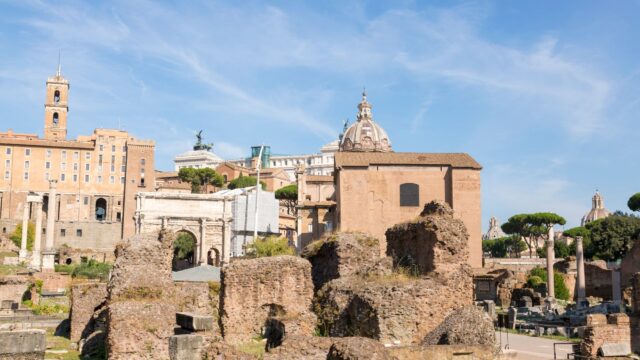
A second Abramović work runs alongside the exhibition. Confession, a site-specific installation at the Arch of Janus on Via del Velabro, near the Bocca della Verità, is open every day from Nov. 19, 2026, to May 19, 2027, from 5pm to 9pm. It was created with rhinoceros, the Fondazione Alda Fendi space next to the arch, and turns the ancient four-sided monument into a place for listening and letting go.
The Forum Boarium and the Circus Maximus are a few minutes’ walk from the arch.
Why the exhibition is in Rome now
GNAMC director Renata Cristina Mazzantini linked the show to a double anniversary: Abramović’s 80th birthday and Italy’s celebration of 80 years since women won the right to vote and stand for election. The Historical Works section was added to the original Transforming Energy project as a tribute to the artist.
The exhibition is curated by Shai Baitel, artistic director of MAM Shanghai, working with Tarsia and the artist. It is organized by Creative Philosophy with the Marina Abramović Institute, and Skira publishes the catalog.
Abramović on artificial intelligence
At the press conference, Abramović said “the science fiction of the 70s is reality today,” Romeing reported. She described an experiment in which her team interviewed an AI version of her trained on all her past interviews. The result frightened her, she said: it recalled things she had said twenty years earlier and had forgotten. She said human brains can no longer keep pace with computers, “and we are losing that game,” and argued that people need to return to simplicity.
Sources: Romeing, ANSA Lazio